Officials Mark Launch of Major Electrification Project at Palisades Towers in Yonkers
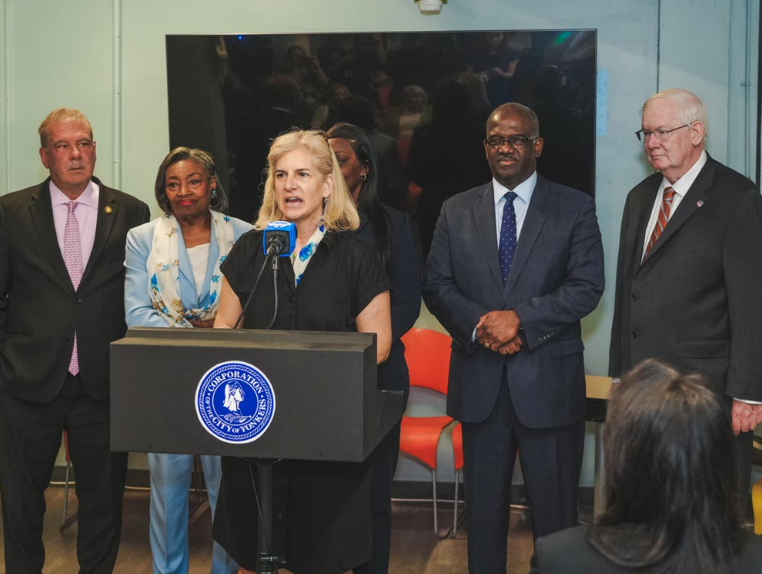
MHACY CEO Wilson Kimbal flanked by (left to right) Yonkers Mayor Mike Spano, NYS Majority Leader Andrea Stewart Cousins, Yonkers City Council President Lakisha Collins Bellamy, Westchester County Executive Ken Jenkins, and Chairman of the MHACY Board of Commissioners James Landy.
Local and state leaders gathered this week to celebrate the start of a long-awaited upgrade at the Palisades Towers apartment complex, where a $35 million effort is underway to transition the buildings from gas to fully electric systems.
The first visible step in the project began with the delivery and installation of hundreds of induction stoves across the 415-unit complex. The move comes after residents spent nearly two years without gas service, which was shut off in August 2024 due to widespread corrosion in the building’s pipelines.
The conversion is being funded through a combination of state, county, and local support, including contributions from New York State housing and energy agencies, the New York Power Authority, Westchester County, and the Municipal Housing Authority for the City of Yonkers (MHACY).
City officials framed the project as both a necessary fix and a long-term investment. By replacing outdated gas infrastructure with modern electric systems, the upgrade is expected to improve safety, reduce emissions, and enhance overall living conditions for residents.
MHACY leadership, which coordinated funding across multiple levels of government, described the effort as turning a difficult situation into an opportunity. In addition to new cooking appliances, apartments will eventually be equipped with improved heating and cooling systems, giving residents more control over indoor temperatures year-round.
The broader scope of the project includes major electrical upgrades throughout the complex, such as new service connections, panel improvements, and expanded wiring to support electric heating, hot water, and cooling systems. Plans also call for the installation of energy-efficient heat pumps, which will provide air conditioning to units that previously did not have it.
Funding for the initiative includes a significant grant from the state’s Climate Friendly Homes program, along with additional support from clean energy and infrastructure programs and local housing initiatives.
Once completed, the overhaul is expected to serve as a model for modernizing aging affordable housing while addressing both infrastructure challenges and climate goals.
